


PRODUCT INSIGHTS
September 24, 2021
The Hidden Secret Behind The Ballpoint Pen's Name
If you take a look at the tiny, highly precise tip of a ballpoint pen...
In this article, we'll take a look at the well-known ballpoint pen.
In 1943, Hungarian László Bíró invented and introduced a practical ballpoint pen. They began appearing in the Japanese market after World War II, and PILOT began manufacturing and selling them in 1961.
At the time, the norm was to write with fountain pens filled with ink or with dip pens, and the introduction of the ballpoint pen had a massive impact.
But do you know why these writing instruments came to be called “ballpoint pens”?
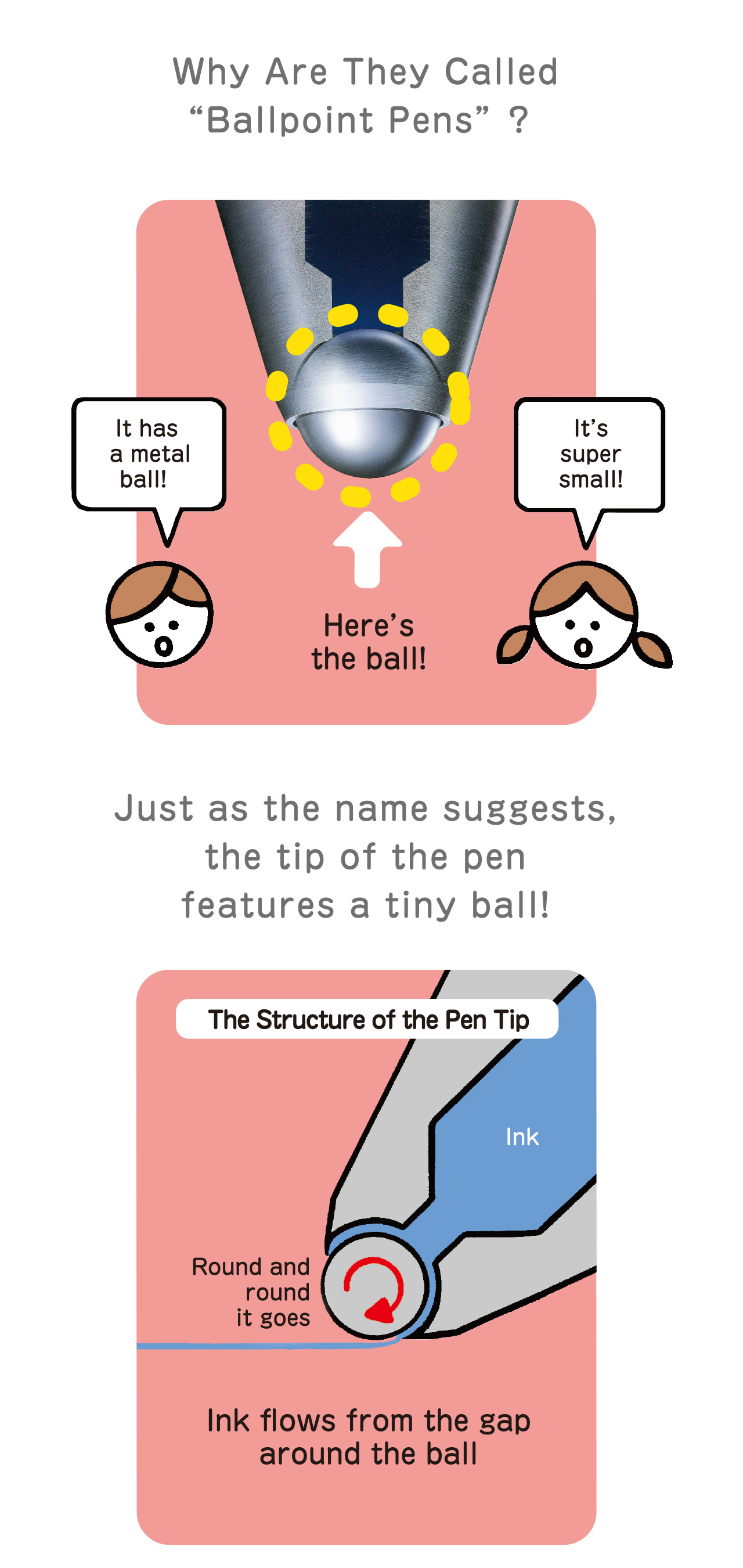
So it’s called a “ballpoint pen” because it has a small metal ball at the tip. In Japanese, it's simply called a "ball pen".
As the ball rolls across the paper, the ink is quickly transferred. It’s a cleverly designed mechanism, isn’t it?
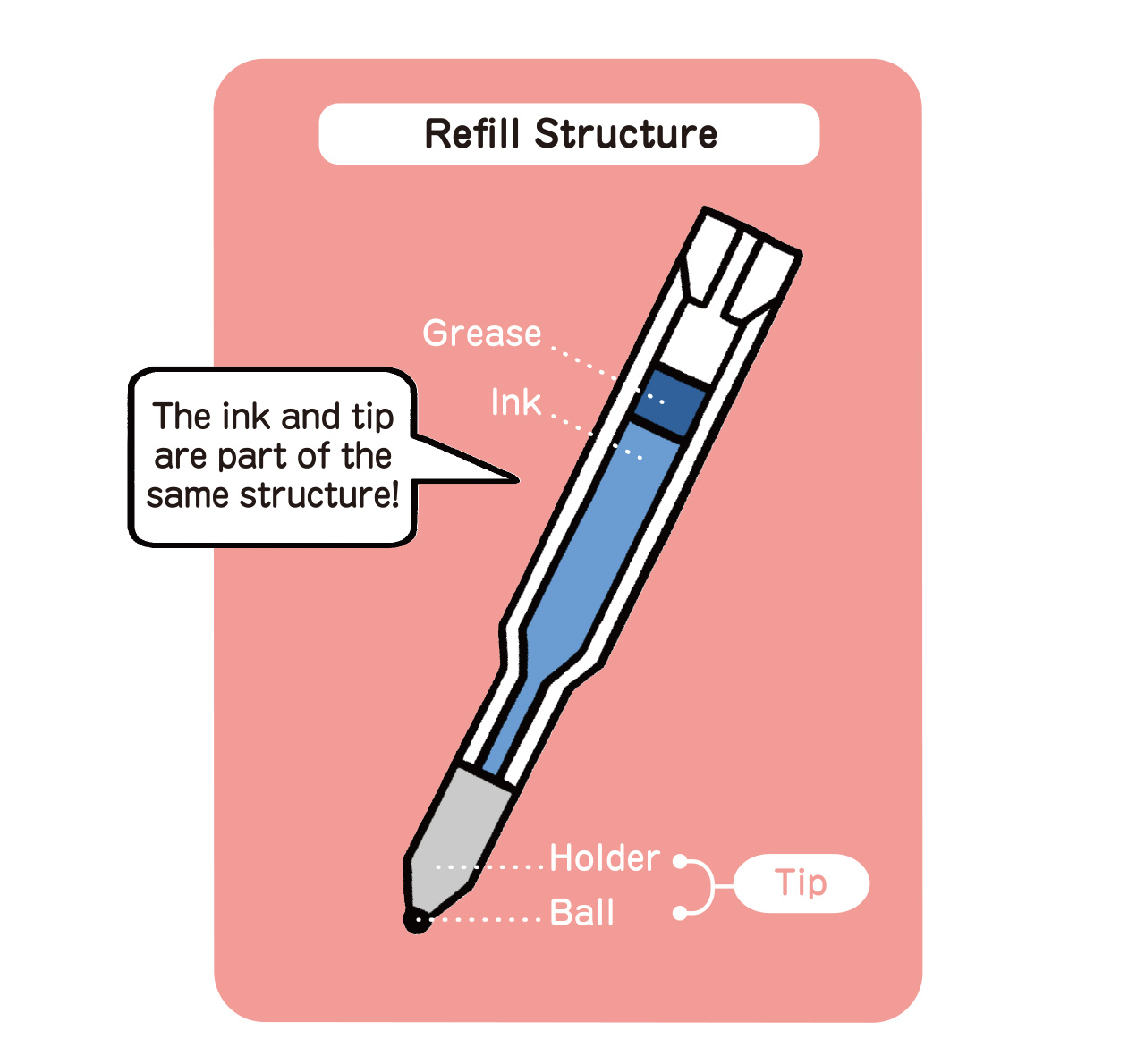
The ball ranges in diameter from 0.25 mm to about 1.6 mm. The ball and the metal tip holder that supports it are collectively called the “tip.”
It is really difficult to make the tip. To ensure the small ball can roll smoothly and stably, the supporting tip holder and ball must fit together precisely at the microscopic level.
To keep the ball from falling out, the tip holder must offer firm support, while also maintaining a clear path for the ink to flow smoothly, all achieved through extremely precise construction. This tiny tip is packed with advanced technology that creates a smooth writing feel. While we tend to take for granted how smoothly and comfortably it writes, it is, in fact, a highly precise product.
Ok, now for a question.
How many millimeters wide is a line drawn by a 0.5 mm ballpoint pen?
Ballpoint pens have sizes like 0.3 mm or 0.5 mm written on them, but what do these numbers refer to?
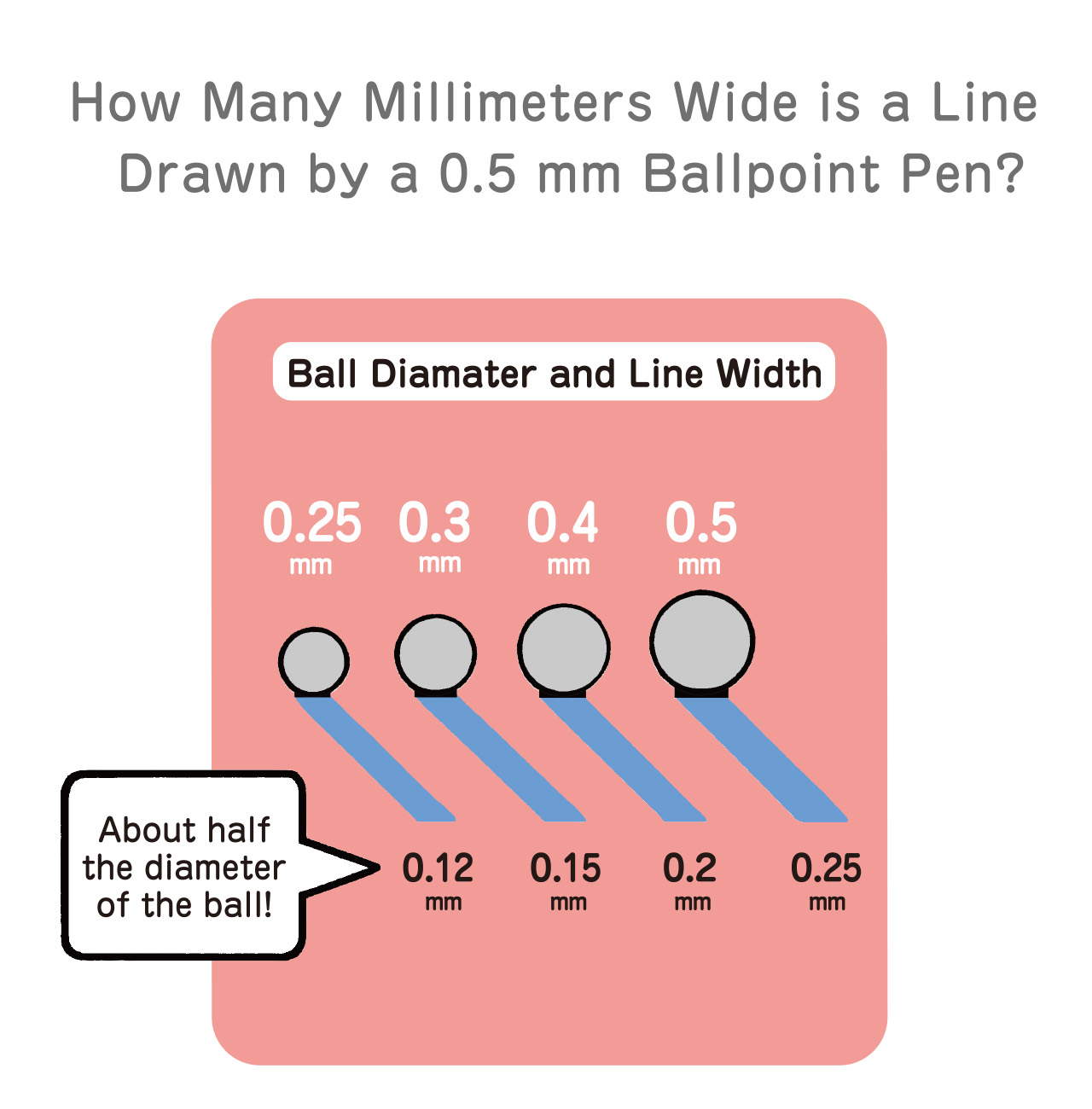
The answer is the diameter of the ball. It is not the width of a line drawn with the pen. Imagine the mark left behind when rolling a ball on the ground. The width of the area where the ball comes into contact with the paper is naturally smaller than its diameter.
The width of a line drawn by a ballpoint pen is about half the diameter of the ball.* Let’s look at a diagram of the relationship between the ball size and the width of a line drawn.
Some of you may have taken a closer look at the pen tip on the ballpoint pen you have in front of you. It’s difficult to see the tiny ball rotating with the naked eye, as it measures just fractions of a millimeter in diameter. The more you look, the more you’ll be surprised by just how precise its construction is.
*The actual line width varies depending on the type of pen, ink, and paper.
〉〉〉Four Things Not To Do That Can Stop a Ballpoint Pen from Writing
<
1
2
>